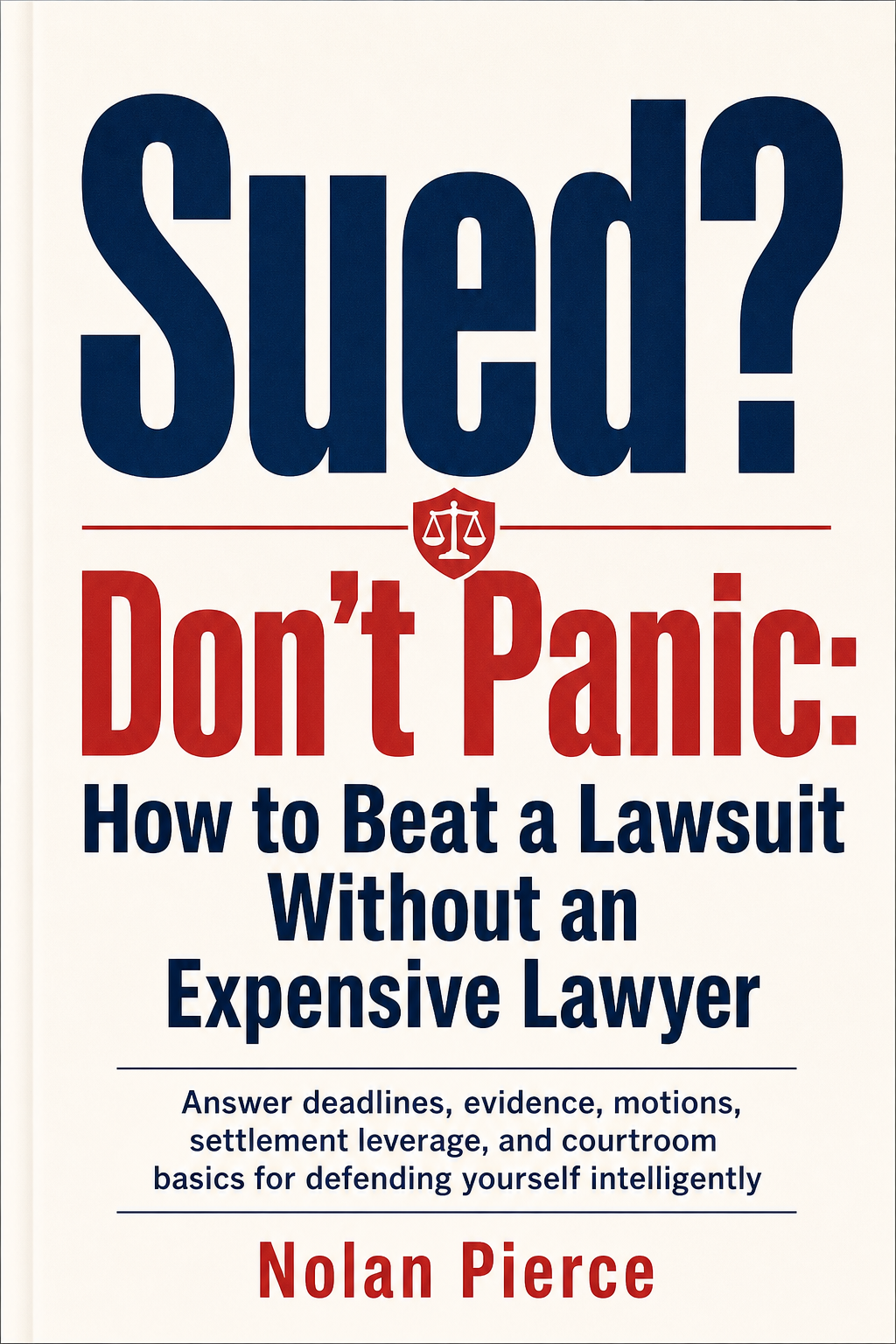
Sued? Don't Panic: How to Beat a Lawsuit Without an Expensive Lawyer
Answer deadlines, evidence, motions, settlement leverage, and courtroom basics for defending yourself intelligently
★★★★★
Answer deadlines, evidence, motions, settlement leverage, and courtroom basics for defending yourself intelligently
★★★★★Sued? Don't Panic: How to Beat a Lawsuit Without an Expensive Lawyer is a practical, aggressive, step-by-step guide for people served with civil complaints, debt claims, landlord disputes, or small-business lawsuits who need a practical first-response plan. It shows how to avoid default, understand the moving pieces, and force the other side to prove its case while avoiding the traps that make the situation worse.
You do not need another vague pep talk about lawsuit defense. You need a field manual: what to do first, what to document, what to say, what to avoid, and how to know whether your plan is working.
Sued? Don't Panic: How to Beat a Lawsuit Without an Expensive Lawyer gives you that manual. It turns lawsuit defense into a sequence of decisions built around service review, answer drafting, affirmative defenses, evidence timeline, discovery requests. Every chapter is written for the reader who wants leverage now and cannot afford to drift.
The book is aggressive about outcomes but disciplined about risk. It warns against missing answer deadlines, calling the plaintiff without a plan, destroying records, then shows a cleaner path built on records, scripts, numbers, and calm follow-through.
Inside you will build a working plan around answer deadline, claim amount, proof gaps, court date. You will see how to prepare conversations, pressure-test choices, and create a 30- to 100-day sprint that keeps momentum alive.
If you are tired of waiting, guessing, or paying for someone else to explain the basics, start here. Read it with a notebook, mark the checklists, and begin the first action before the day ends.
Most people lose ground because they wait for confidence before acting. The plan in this book creates confidence by giving you the next documented step.
Reader bonus
Get 3 hand-picked ebooks that pair with this book’s topic. They’re delivered by email with your purchase and added to your MyBooks library.
Continue to checkout to add the full 3-book companion bundle for just $9.99.
Showing 281–300 of 500 reviews
As a small business owner, I found this book to be a clear, no-nonsense roadmap through the overwhelming process of being sued. Unlike many generic self-help titles, it avoids useless legalese and equips you with practical steps to respond promptly, understand your options, and build a strong defense without immediately hiring expensive counsel. The author’s insights feel grounded in real courtroom experience, helping me spot common traps and leverage my position wisely. This is a must-have for anyone in business who wants to face litigation with confidence and keep costs down.
Balancing a 9-to-5 and a small side business is already a challenge, and the thought of legal trouble adds a whole new level of stress. What stood out about this book is its calm and straightforward approach—it doesn’t hype up panic but guides you through those initial shock moments with easy-to-understand advice and realistic examples. The way it breaks down complex legal steps into manageable actions really helped me feel less overwhelmed. I especially appreciated how the book emphasizes smart decision-making over fear, showing how common mistakes like missing deadlines or not organizing evidence can worsen a case. It’s incredibly reassuring for someone like me who isn’t a lawyer but wants to defend myself effectively. I’d definitely recommend it to fellow side hustlers who want practical, reliable support without getting lost in legal jargon.
As someone fresh out of college, this book made the confusing world of lawsuits much easier to grasp. It avoids legal jargon and breaks down what small business owners or anyone sued really need to know. I especially appreciated the real-world tips about deadlines and evidence, which helped me understand how to respond calmly and effectively. It’s not about turning you into a lawyer, but about guiding you to make smart moves and recognize when professional help is needed.
At first, I was hesitant to pick up a self-help legal book, assuming only attorneys could navigate the complex legal maze when sued. However, this guide completely changed my perspective. It offers clear, practical advice that demystifies the entire process—from the moment you get served to negotiating settlements without feeling helpless or overwhelmed. What really stood out to me was how it empowers you to respond intelligently and avoid common pitfalls that can escalate problems unnecessarily. The book doesn’t just throw legal jargon at you; instead, it explains deadlines, how to draft your answer, and how to use evidence strategically to make the other party prove their claims. It’s like having a knowledgeable ally in your corner, helping you stay calm and in control. While lawyers are invaluable in some cases, this book equips you with the foundational knowledge to act decisively and protect your interests when you can’t afford expensive representation. It’s an indispensable resource that every business owner or individual should have on hand to prevent panic and handle lawsuits confidently.
As someone who’s always looking to save money and avoid unnecessary expenses, I found this guide a lifesaver. It breaks down the confusing legal maze you face when sued without drowning you in jargon or pushing pricey lawyer fees right away. The step-by-step advice is clear and realistic, showing how to respond properly, spot traps, and even use the process to your advantage. It’s honest about when you really need a lawyer versus when you can handle things yourself, which helps you avoid costly mistakes. If you want a smart, practical way to fight back without breaking the bank, this book is a must-have.
Having been burned before by overpriced legal advice and confusing jargon, I appreciated how this book cuts through the noise with steady, clear guidance. It doesn’t hype up the fear of being sued but instead calmly walks you through what to do right after you receive papers. The examples and step-by-step approach make the whole process feel manageable rather than overwhelming. What really stood out is how the advice focuses on practical business sense instead of legal drama. It helps you avoid common traps like missed deadlines or bad decisions driven by panic. I especially liked how it shows you how to keep control, force the other side to prove their case, and negotiate without begging. This is exactly the kind of no-nonsense, reassuring resource small business owners need.
As someone who learns best by doing, I appreciated how this book breaks down the confusing steps after being served with a lawsuit. It avoids overwhelming legal jargon and instead uses straightforward language and relatable examples with documents, deadlines, and evidence. What stood out was the emphasis on staying level-headed and knowing when to handle things yourself versus seeking expert counsel. This guide is a calming, no-nonsense resource for anyone trying to navigate legal challenges on their own.
Sued? Don't Panic is exactly the kind of comprehensive, step-by-step manual that detail-oriented individuals like me need when facing the overwhelming stress of a lawsuit. Instead of immediately rushing to hire an expensive lawyer, this book equips you with the crucial knowledge to handle the legal process with confidence and clarity. Its practical approach demystifies the first 48 hours after being served, guiding readers through deadlines, answers, and the paperwork with precision. What I appreciate most is how it empowers readers to avoid common pitfalls that escalate problems and instead build a solid defense from the start. It breaks down complicated concepts into manageable tasks like drafting a clear answer, uncovering hidden defenses, and organizing evidence effectively. This prevents panicking and fosters a proactive mindset. Moreover, the book highlights how to leverage discovery and negotiation tactics without feeling vulnerable or desperate. It’s reassuring to have a resource that explains when legal representation is truly necessary and when smart self-defense can succeed. For anyone who wants to protect their interests without blindly relying on lawyers, this book is a must-have blueprint for navigating the legal system calmly and strategically.
As a busy parent balancing work and family, I needed straightforward, no-nonsense advice when I was unexpectedly served with a lawsuit. This book cuts through the confusion without bogging you down in legal jargon or useless templates. It clearly lays out what steps to take immediately, how to handle deadlines, and when you really need legal help versus representing yourself. The guidance is thorough yet easy to understand, helping me avoid costly mistakes and stay in control of my case. I highly recommend it to anyone who needs a clear roadmap to navigate the stress and complexity of being sued without spending a fortune on attorneys.
As someone new to running a business, I found this book incredibly steadying. Instead of freaking me out about getting sued, it calmly walks you through that initial shock with straightforward advice and relatable examples. The way it breaks down each step — from reading the complaint to answering deadlines — really helped me understand what to do first without drowning in legal jargon. What I appreciated most was how it focuses on practical business sense rather than scary legal drama. The examples felt real and human, showing how first-time entrepreneurs like me can get tripped up by panic or missed paperwork. This is a solid 5-star resource for anyone facing their first lawsuit and wanting to respond smartly and confidently.
Having recently retired, I never expected to find myself dealing with a legal dispute. This book offered a clear, no-nonsense approach that helped me understand the key steps without feeling overwhelmed. Unlike other manuals filled with confusing legal jargon or useless forms, this guide patiently breaks down what to expect and how to respond effectively. It’s especially useful for folks like me who need straightforward advice on navigating deadlines, gathering evidence, and deciding when to bring in a lawyer. I highly recommend it for anyone who wants to handle a lawsuit smartly without costly legal fees.
As a full-time freelancer, the thought of being sued was absolutely terrifying, but this book immediately eased that anxiety with its steady, no-nonsense approach. Rather than trying to scare you with legal jargon or worst-case scenarios, it calmly breaks down that stressful "oh no" moment into manageable steps using straightforward language. I appreciated how the examples felt drawn from real-life situations, making the advice feel both practical and relevant to someone running a one-person business like me. What I found especially valuable was how the book focused on smart decision-making over emotional reactions. It highlighted the importance of keeping a clear head instead of panicking or rushing into costly mistakes. The way it explained how common missteps happen—like missing deadlines, mishandling paperwork, or relying on bad advice—felt spot on. This helped me understand exactly what traps to avoid and gave me confidence that I could handle the process on my own. While it repeats some key warnings to drive home important points, I found this reassuring rather than tedious. The book’s tone is friendly but firm, which helped me stay focused on what mattered. For freelancers or solo entrepreneurs worried about lawsuits, this guide is both accessible and genuinely comforting. It’s a solid 5-star resource that I would recommend to anyone wanting a clear plan to defend themselves without shelling out for expensive legal help.
Sued? Don't Panic is a straightforward and accessible guide that breaks down the intimidating process of facing a lawsuit without drowning in legal jargon. As a small business owner, I appreciated how it highlights common pitfalls—like missed deadlines and poor document management—and offers realistic strategies with examples that feel immediately applicable. What stood out most was the calm, no-nonsense approach that encourages smart responses rather than pretending you can be your own attorney. It’s an empowering resource that helps you know when to handle things yourself and when to seek expert help, making it a must-have for anyone concerned about legal issues in business.
Balancing a day job with a side hustle means every minute and dollar counts, especially when legal troubles arise. This book offers clear, practical steps that help you respond confidently to a lawsuit without immediately resorting to costly lawyers. It equips you with essential knowledge to keep calm and act smart, which is invaluable when you’re new to the legal world. What I appreciate most is how it breaks down complex legal concepts into actionable advice, empowering you to protect your interests and avoid common pitfalls. For anyone juggling multiple responsibilities and worried about legal risks, this guide is a lifesaver that helps you stay in control and avoid panic.
As someone fresh out of college with limited legal background, I found this book incredibly straightforward and useful. It breaks down the confusing process of responding to a lawsuit into manageable steps without drowning you in jargon or useless DIY forms. The advice feels rooted in real legal experience, helping you understand when a lawyer is essential and how to avoid common traps. Definitely a must-read for anyone who wants to handle a legal challenge with confidence and clarity.
I went into reading this book quite skeptical, expecting another legal guide that would either overwhelm me with jargon or scare me into thinking the worst. Instead, I found a refreshingly grounded and straightforward approach that really helped me navigate the initial shock of being sued. The author’s calm tone never feeds into panic; rather, it guides you through the confusing first hours with simple language and realistic examples that anyone can relate to. What I appreciated most was how the book emphasized practical business sense over emotional reactions, helping me see what steps I needed to take without spiraling into fear. The way the book breaks down the process—highlighting critical deadlines, how to draft your answer, and even when to consider hiring a lawyer—felt like having a knowledgeable friend by my side. It made the complicated legal system feel accessible and manageable. Some parts revisit key warnings, which initially felt a bit repetitive, but I quickly understood why: those points are crucial to remember when under stress. For small business owners or anyone dealing with a civil complaint, this guide is a solid, trustworthy resource that reassures rather than frightens. Overall, it turned my anxiety into a sense of control, and for that, I’d definitely rate it 5 out of 5.
This guide was a lifesaver for me as someone who wants to handle legal troubles without breaking the bank. The advice is straightforward and avoids confusing jargon, making it easy to grasp the key steps after being sued. I especially appreciated how it highlights common pitfalls to avoid and clearly explains when it’s smart to seek professional advice. For small business owners or anyone nervous about lawsuits, this book is a smart, no-nonsense resource that helps keep costs down while staying in control.
After a rough experience following poor legal advice, I finally found this book to be a much-needed lifeline. It cuts through the confusion and panic that come with being sued, providing practical steps that empower you to respond effectively without immediately relying on pricey lawyers. The guidance on deadlines, answers, and how to make the other side prove their case is especially valuable. This book arms you with the knowledge to stay in control and avoid common traps that can make matters worse. For anyone who’s felt overwhelmed or burned before, it’s a smart investment in your peace of mind and defense strategy.
As someone without formal legal training, I found this book incredibly helpful in breaking down what to expect when you get sued. It avoids confusing jargon and focuses on realistic steps to keep you in control of your case. Unlike many DIY legal guides, it doesn't just hand out generic templates but explains why certain approaches matter and when you might actually need a lawyer. I’d recommend it to any business owner or individual who wants a solid game plan without getting overwhelmed.
As someone who likes to tackle challenges methodically, I appreciated how this book approaches the intimidating reality of being sued with a composed, straightforward voice. It doesn’t sensationalize the experience but rather breaks down those initial moments after being served into manageable steps with plain language and concrete examples. The author’s focus on smart decision-making over emotional reaction really resonated with me. What stood out most was the book’s practical emphasis on understanding the complaint, meeting deadlines, and assembling your evidence carefully — all conveyed in a way that feels accessible even if you’ve never dealt with legal issues before. It avoids unnecessary legal jargon and instead encourages readers to think like their own best advocate, which is empowering. I also found the scenarios and tips about negotiation and preparing for hearings especially helpful because they provide a realistic roadmap without overwhelming you. The advice feels grounded in actual experience rather than theory, which makes it ideal for small business owners or anyone who needs a clear, no-nonsense plan to respond confidently. This book is a top-notch resource for anyone wanting to face the lawsuit process with a calm and focused mindset.
“A sharp, no-padding playbook for readers who want movement on lawsuit defense now.”
“The rare guide that combines aggressive positioning with sober warnings about the mistakes that backfire.”
“Built around scripts, timelines, and measurable progress instead of inspirational fog.”