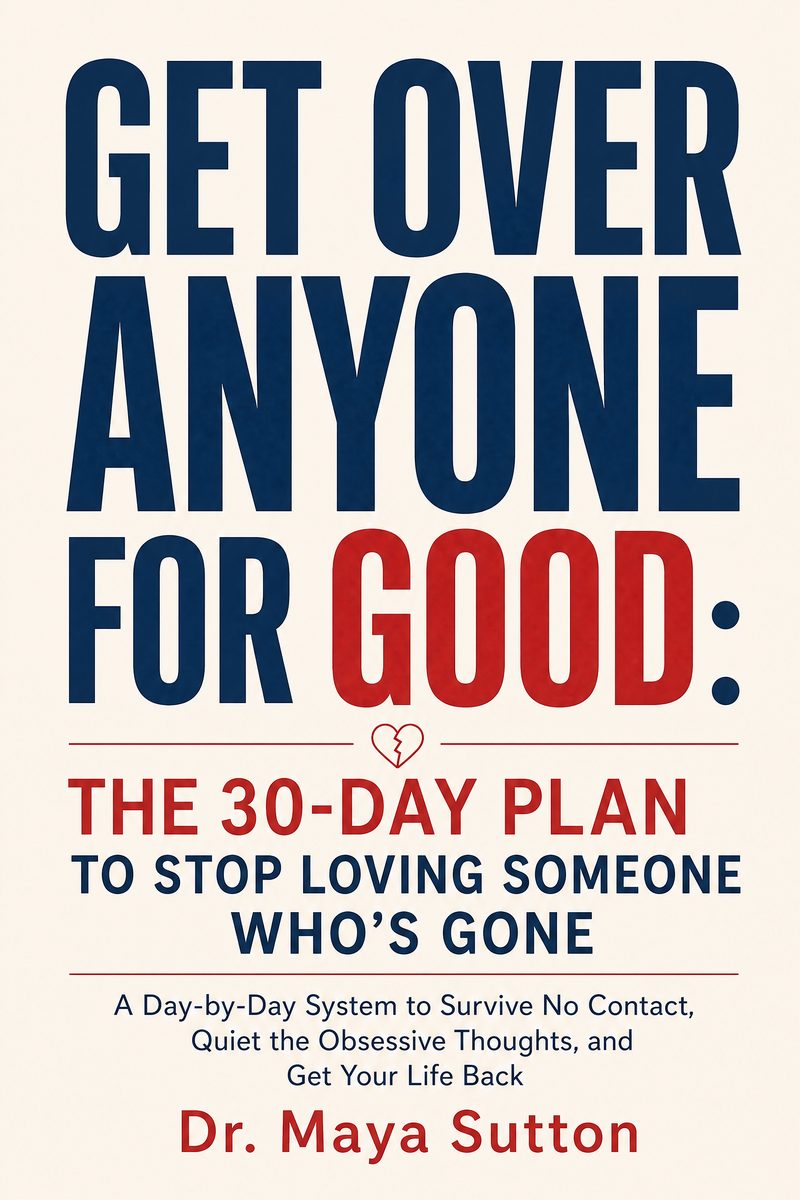
Get Over Anyone for Good: The 30-Day Plan to Stop Loving Someone Who's Gone
A Day-by-Day System to Survive No Contact, Quiet the Obsessive Thoughts, and Get Your Life Back
★★★★★
A Day-by-Day System to Survive No Contact, Quiet the Obsessive Thoughts, and Get Your Life Back
★★★★★A brutally practical, 30-day, day-by-day program for anyone who knows it's over but can't stop loving, checking, and hoping. It replaces vague 'time heals' advice with concrete daily actions to survive No Contact, break the obsessive thought loop, grieve on purpose, and rebuild an identity that doesn't revolve around the person who left.
You already know it's over. That's not the problem. The problem is that your brain didn't get the memo, and every night it drags you back to the same person who is never coming back. You've read the quotes. You've heard 'just give it time.' You've maybe even gone No Contact and relapsed by Tuesday. None of it stopped the ache, because none of it gave you a plan.
Get Over Anyone for Good is that plan. In 30 numbered days, Dr. Maya Sutton walks you through exactly what to do each morning, each night, and in every craving in between. You'll learn why your brain treats this person like a drug and how to detox from them on a schedule. You'll get scripts for the moment you want to text, a system that makes No Contact actually stick, and grief rituals that move pain through you instead of trapping you in it. By the end, you won't be faking 'I'm fine.' You'll be genuinely indifferent, fully yourself, and free.
This is not a book about getting them back. It's not about toxic positivity or pretending you didn't love them. It's a structured, secular, science-backed recovery protocol for the specific, humiliating, exhausting pain of still loving someone who is gone. Thirty days. One clear instruction at a time. Your life, returned to you.
I wrote this because 'give it time' nearly destroyed me. Time alone doesn't heal you. What you do with the time does. So I'm going to tell you exactly what to do, one day at a time, until the person who left finally loses their grip on you.
Reader bonus
Get 3 hand-picked ebooks that pair with this book’s topic. They’re delivered by email with your purchase and added to your MyBooks library.
Continue to checkout to add the full 3-book companion bundle for just $9.99.
Showing 81–100 of 518 reviews
This book delivers a straightforward, no-nonsense approach to moving on from heartbreak without wasting time or money on fluff. It tackles all the tough emotions—loss of identity, crushing anxiety, and that sinking feeling of rejection—with clear daily steps that actually work. The 30-day plan keeps you focused, helping you regain control and rebuild your life piece by piece. I appreciated the practical advice for handling triggers and the emphasis on reclaiming your sense of self. If you want a solid, budget-friendly guide to stop obsessing and start living again, this is it.
Having wasted too much time on generic advice that didn’t help me move on, this book was a breath of fresh air. The step-by-step 30-day plan brought clarity and structure when I needed it most. The way it emphasizes taking control and focusing on purposeful actions really resonated with me, turning the overwhelming pain into manageable growth. What stood out was how it breaks down the process into achievable daily tasks, making it easier to reclaim my life after the breakup. This approach made me realize that healing isn’t about waiting it out, but about actively rebuilding yourself. I highly recommend this to anyone stuck in the endless cycle of hoping and obsessing.
I really appreciated how the author shared personal insights about the struggle to let go and rebuild after a breakup—it made the advice feel grounded and relatable. The step-by-step plan is straightforward and emphasizes the need for support, which I found very encouraging. This book offers a solid, no-nonsense approach to breaking the cycle of obsessive thoughts and reclaiming your life. There’s a lot to absorb here, so I’ll definitely be revisiting it to fully benefit from the detailed guidance.
I’ve always believed that getting over a deeply meaningful relationship was something that just happened with time, but this book challenged that assumption with a clear, structured approach. What I appreciated most was its emphasis on deliberate daily actions rather than vague platitudes. The 30-day plan felt like a carefully crafted blueprint that guided me through the initial emotional fog, helping me understand why it’s so hard to let go and how to gently but firmly dismantle the mental patterns holding me back. The practical steps for establishing and maintaining No Contact were a game-changer for me, especially with the detailed explanations of the brain’s response to loss. I found the sections dedicated to breaking the obsessive thought cycle and intentionally grieving to be particularly insightful—they gave me permission to feel without getting stuck, which made all the difference. This isn’t a book that sugarcoats the pain or offers quick fixes; it’s a patient, purposeful companion for anyone ready to do the work to reclaim their life. Beyond the emotional tools, I valued how it helped me rebuild my identity separate from the person I lost. The exercises around rewriting memories and handling triggers were practical and realistic—nothing felt forced or clichéd. For someone who likes clear, actionable plans, this book is a refreshing alternative to the usual advice that ‘time heals all wounds.’ It’s about making time count with intentional steps. I highly recommend it if you want a grounded, trustworthy guide that respects the complexity of moving on.
As a busy parent balancing work and family, this book gave me the clear, step-by-step plan I needed to finally move on after a tough breakup. Instead of vague advice, it lays out daily actions that helped me manage all the emotional ups and downs—grief, anxiety, and those relentless thoughts—without feeling overwhelmed. The focus on reclaiming my routine and identity made recovery feel possible even with my packed schedule. It's a straightforward, realistic guide that actually fits into a hectic life and leads to real healing.
As someone launching my own startup, my schedule is packed and I don’t have time for vague advice on heartbreak. This book’s 30-day plan broke everything down into manageable daily steps that really made a difference. It’s more than just pep talk—it’s a clear, actionable roadmap that helped me quiet the obsessive thoughts and finally start rebuilding my life. What I appreciated most was how the book treats heartbreak like a process you can work through systematically, which really resonated with my entrepreneurial mindset. If you’re serious about moving forward and reclaiming your identity after a tough breakup, this is the guide that will get you there.
Going through a tough breakup in retirement was unexpectedly rough, and this book gave me practical steps that really made a difference. The day-by-day approach made the process feel manageable, and I appreciated the clear explanations about why my mind kept replaying old memories. Sometimes the writing felt a bit repetitive, but the personal tone helped me stay connected to the advice. Overall, a solid guide for anyone serious about moving forward.
As someone who juggles multiple freelance projects and rarely has time for self-reflection, I found this book to be an invaluable resource. It clearly explains why our feelings can feel so overwhelming after a breakup and gives actionable steps to manage them. The day-by-day layout helped me stay focused even on my busiest days, making the emotional process less daunting. What I appreciated most was how the book doesn’t just offer vague comfort but breaks down the science behind the obsessive thoughts and emotional pain—something I’d never fully understood before. This made the advice feel credible and effective rather than just feel-good platitudes. The practical exercises, especially around managing triggers and rebuilding my sense of self, were exactly what I needed to move forward. If you’re a busy professional like me who needs more than just 'wait it out' advice, this book gives you a clear, manageable plan to finally get over someone and reclaim your life. I can honestly say it’s helped me understand my emotions deeply and given me the tools to heal in a healthy way.
As a small-business owner, I appreciate straightforward, actionable advice, and this book delivers exactly that for anyone struggling to let go after a breakup. The author's no-nonsense approach breaks down the emotional turmoil into manageable daily steps, helping you detox from obsessive thoughts and regain control over your life. The emphasis on intentional grieving and reclaiming your identity beyond the relationship really resonated with me. Plus, the book’s motivational tone and real-life success demonstrations make the journey feel achievable rather than overwhelming. Highly recommend it if you want a clear plan to move forward and rebuild yourself.
This book doesn’t promise any magical quick fixes, but it offers practical insights that really resonate, especially when you’re juggling a busy job and a side hustle. The author clearly understands the struggle of a breakup firsthand, which makes the advice feel authentic and trustworthy. It didn’t completely transform my outlook overnight, but the step-by-step approach helped me put some order to the chaos in my head. I’d definitely suggest this to anyone looking for a no-nonsense plan to move forward without getting stuck in old patterns.
Fresh out of college and heartbroken, I was spiraling and needed a clear plan—not just vague advice. This book gave me daily, practical steps that truly helped me stop obsessing and start healing. It pushed me to respect myself and find strength in the sadness, teaching me how to let go with courage. Months later, I felt confident and whole again, and even though he didn’t come back, I’m finally living my best life. For anyone struggling to move on, this day-by-day approach is a game changer.
I honestly wasn’t sure a book like this could offer anything truly new or helpful—after all, how many times can someone tell you to just 'move on' or 'give it time'? But this plan totally changed my perspective. The step-by-step, day-by-day approach felt like having a coach beside me, guiding me through the messy reality of heartbreak instead of vague platitudes. The way it breaks down the No Contact period into manageable chunks, with practical advice on stopping obsessive thoughts and even rewriting my memories, was incredibly grounding. What really got me was how it helped me reclaim parts of myself I’d lost in the relationship—the simple things like better sleep, morning routines, and most importantly, rebuilding my identity without the person who left. I was also grateful for the realistic tips on dealing with triggers, like mutual friends or anniversary dates, which no one else had prepared me for so thoroughly. If you’re like me, skeptical that a book could help you really heal, this one will surprise you. It’s empowering without being cheesy, brutally practical without being cold. I recommend it not only for yourself but also for any woman you know who might be silently suffering—the kind who hides her pain well. This is the kind of resource that can keep you steady and help you come out stronger on the other side. Don’t wait until you’re in the thick of it; having this guide early on is a game changer.
This book delivers solid, down-to-earth advice that any woman needing to move on should read—especially if you're tired of vague 'time heals' clichés. The step-by-step 30-day plan really drives home the importance of sticking to No Contact and not letting yourself get played, which is something I wish I'd understood years ago instead of just hoping for closure. It reinforced the value of self-respect and showed me that if someone truly cares, they'll prove it rather than disappear or offer lame excuses. While the practical tips are worth every penny, I did notice some awkward phrasing and grammar slips here and there that could use tightening up. Still, it’s a valuable guide for anyone ready to stop the mental spiral and reclaim their life without spending a fortune or endless time second-guessing.
After countless heartbreaks and following the usual vague advice that never helped, I was desperate for something practical and clear. This book delivers exactly that—a straightforward 30-day plan that breaks down the overwhelming process of moving on into manageable daily steps. It’s concise yet powerfully effective, giving me tools to stop obsessing, enforce no contact, and truly start to heal. What I appreciate most is how this guide doesn’t sugarcoat the pain or suggest just waiting it out. Instead, it empowers you to take control and rebuild your identity beyond the relationship. If you’re tired of getting your heart shattered and want a proven roadmap to get your life back, this is the one to turn to immediately after a breakup.
I went through the 30-day plan when I was really stuck and honestly, it’s exactly what I needed. No fluff or complicated theories—just clear steps to rebuild myself and keep my boundaries firm. The advice helped me stay strong when things got rough, and I started feeling like I could finally move on without losing myself. If you’re overwhelmed and hurting, this practical approach makes it manageable to take back control of your life.
As someone who thrives on structured plans and clear steps, this 30-day guide was exactly what I needed to break free from a painful attachment. The day-by-day format takes the guesswork out of what to do next, providing concrete actions that helped me replace obsessive thoughts with meaningful activities. The emphasis on establishing No Contact early on was a game changer—it wasn’t just advice but a practical system that finally stuck for me. What I particularly appreciated was how the program encouraged me to fill my days proactively. Instead of falling into old patterns of checking my phone or replaying memories, I focused on volunteering and personal growth, which gave me a renewed sense of purpose. The book’s insight into how our brains treat lost love like an addiction was enlightening and helped me understand why I felt so trapped emotionally. By the third week, I found myself laughing at the idea of rekindling something that was clearly not meant to be. The shift from longing to indifference felt natural and empowering. It also felt rewarding to notice new connections and possibilities opening up as I refocused on myself. This book gave me not just hope but a detailed, actionable blueprint to regain control and rebuild my identity beyond the past relationship. For anyone looking for a no-nonsense, practical approach to moving on, this is an invaluable resource.
As a busy mom balancing work and family, I rarely find time to read, let alone finish a self-help book. This 30-day plan grabbed me from the start with its clear, no-nonsense approach that cuts through the usual vague advice. It’s like having a supportive friend who’s tough when needed but always understanding—reminding me I’m not alone and that I can get through the heartbreak. The daily steps are practical and doable even on my busiest days, guiding me gently but firmly away from obsessive thoughts and toward reclaiming my life. This book is a lifeline for anyone overwhelmed by loss and looking for a real plan to move forward.
As someone launching my first business, I found myself blindsided by a tough breakup that left me questioning my worth and my ability to focus. This book was a steady, compassionate companion that helped me understand that healing isn’t about just waiting out time, but about taking deliberate steps to reclaim my identity and peace. It’s refreshing to have a plan that emphasizes honoring yourself and maintaining the qualities that made you whole before the relationship, instead of losing yourself trying to keep someone else around. What really stood out is the book’s focus on the importance of No Contact when it’s clear the other person has moved on or isn’t giving the respect you deserve. It helped me see that I’m not responsible for chasing affection or proving my value. Instead, it encourages rebuilding your life with dignity and openness to better connections down the road. For anyone navigating the messy aftermath of a breakup and wanting actionable guidance rather than vague platitudes, this is a solid, encouraging resource.
This book came into my hands at just the right moment. The step-by-step approach helped me finally break free from obsessive thoughts that had lingered for months. As someone recently retired, I appreciated the clear daily guidance more than vague advice. It truly felt like a lifesaver for my peace of mind.
As someone juggling multiple projects with the unpredictable schedule of a full-time freelancer, it’s been a challenge to navigate the emotional chaos after my breakup. This book’s day-by-day approach has been an invaluable anchor, especially during the first few days of imposing No Contact — something I’ve found incredibly tough. The author’s clear explanation of why our brains cling to someone like an addictive drug really helped me understand my own compulsive checking and obsessive thoughts. Having just begun the 30-day plan, I’m slowly realizing that maybe, just maybe, moving on is not only necessary but within reach. The book doesn’t sugarcoat the difficulty, which I appreciate because it acknowledges the painful reality many of us freelancers face without a steady support system nearby. I often doubted if No Contact would work for me, but now I’m beginning to see that if I had started this process earlier, I might have saved myself some heartache. One area where I wished for a bit more guidance was after the initial No Contact phase — specifically, what to do if the person reaches out again. The book gives an excellent framework for breaking the cycle, but I found myself wondering how to protect my progress if contact resumes unexpectedly. Having a strategy for that scenario would make this book truly comprehensive. Nonetheless, I’m committed to following through with the program, hopeful that it will lead me either to healing on my own or to a healthier connection, if that’s meant to be. For freelancers and anyone whose life depends on maintaining focus and emotional clarity, this book is a much-needed tool. I highly recommend diving into it early and treating the plan like the vital work it is — your emotional wellbeing depends on it.
“The first breakup book I've read that treats heartbreak like the medical-grade problem it is. Sutton doesn't comfort you to death; she gives you a schedule and refuses to let you drown.”
“Most 'move on' books are 200 pages of permission to feel sad. This is 30 days of permission to actually get better. The Emergency Toolkit alone is worth the price.”
“Aggressively practical and impossible to put down. By Day 9 our test readers had stopped checking their ex's profile. That is not normal. That is the book.”